Tell us about the job
Takes about a minute. No obligation.
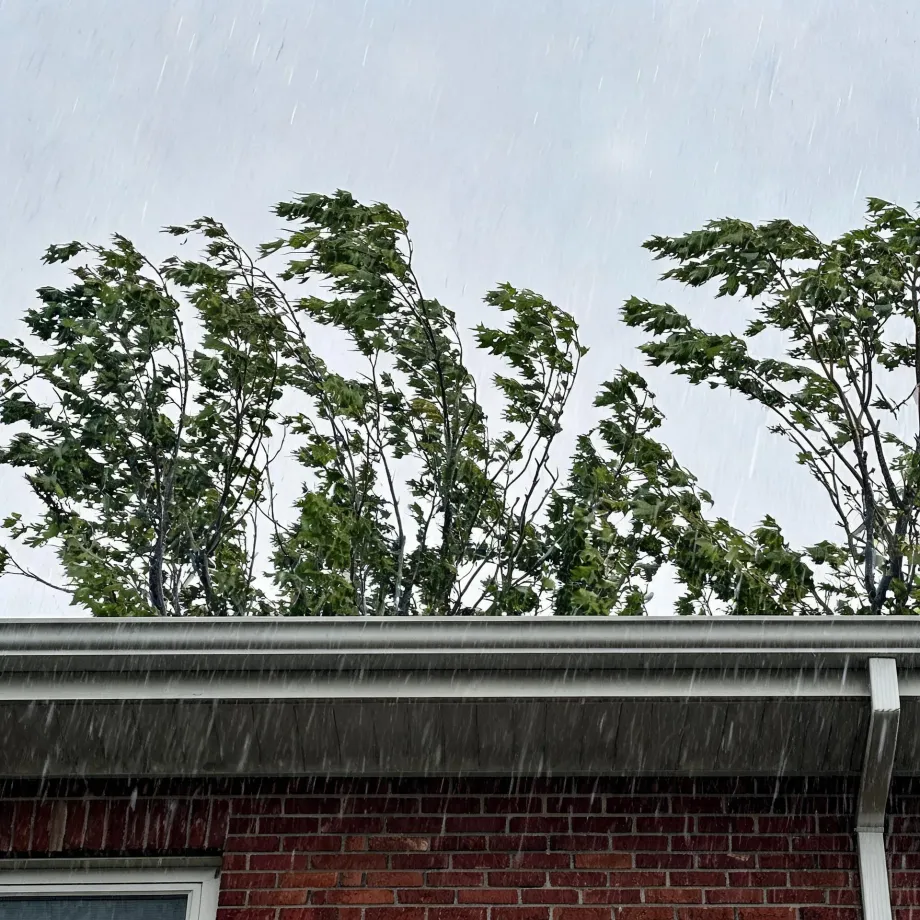
A contractor quoting a water heater installation in Berkeley County starts with what the equipment will be asked to handle, and the answer here is not mild. 138 severe weather events were recorded in Berkeley County, West Virginia between 2015 and 2024. At that rate, severe weather is a standing condition of operating in this area, and a system specified without accounting for that load gets undersized from day one. A contractor will factor local demand into both the unit selection and how it is set into the space, because those decisions are harder to correct after the install is done.
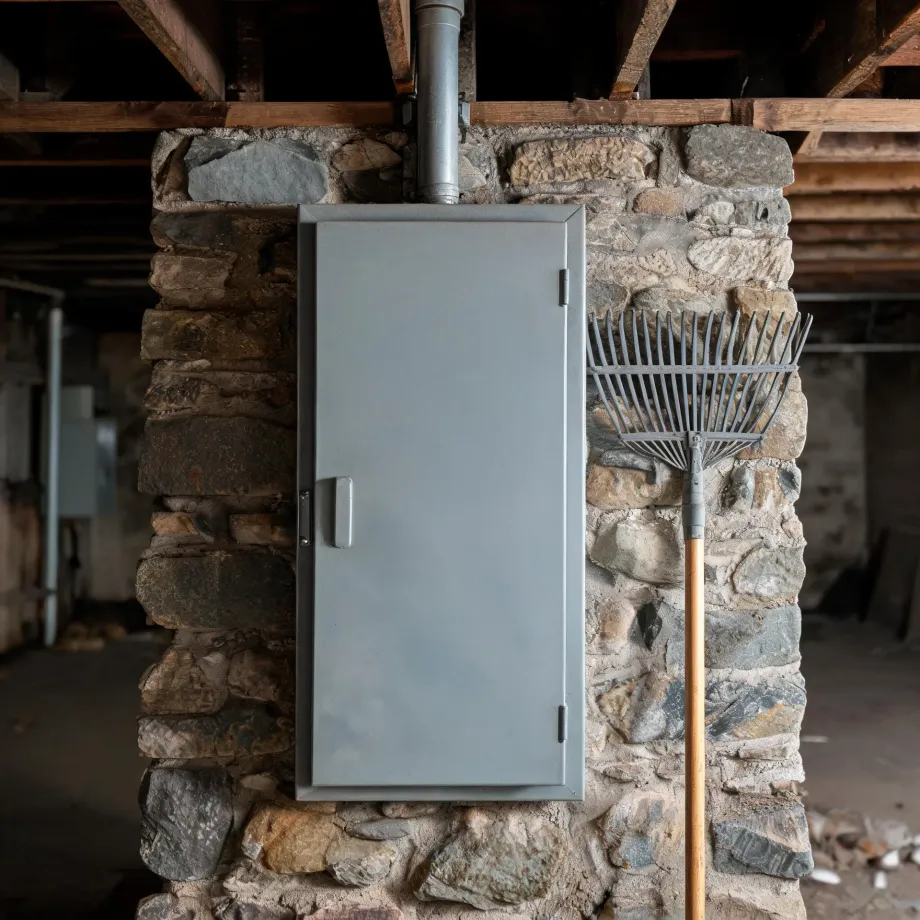
Existing ductwork and venting in a house this age were designed around equipment standards that have since changed, and a water heater installation surfaces that gap quickly. Half the homes in Berkeley County, West Virginia were built in 1996 or earlier (2020-2024 ACS 5-year). That means a contractor assessing the job has to look at what the house already carries before anything else: whether the flue is sized right, whether the venting path will work with a new unit's exhaust requirements, and whether the existing connections meet current code. The equipment going in is straightforward. What surrounds it is where the job gets defined.
What a Water Heater Installation Covers
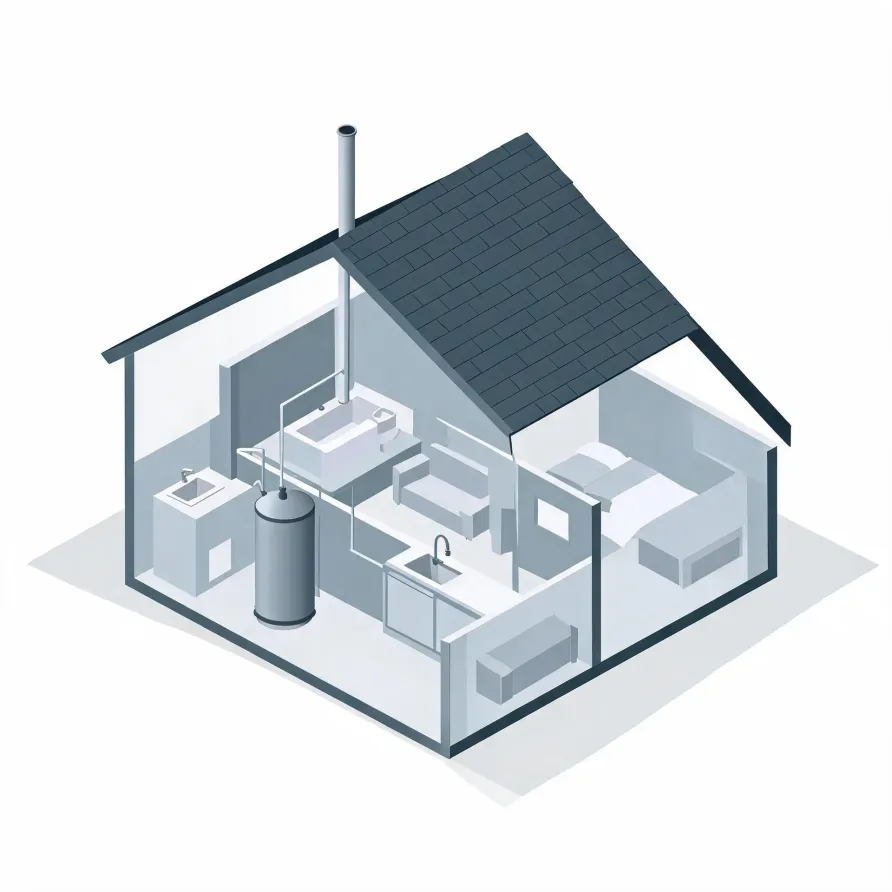
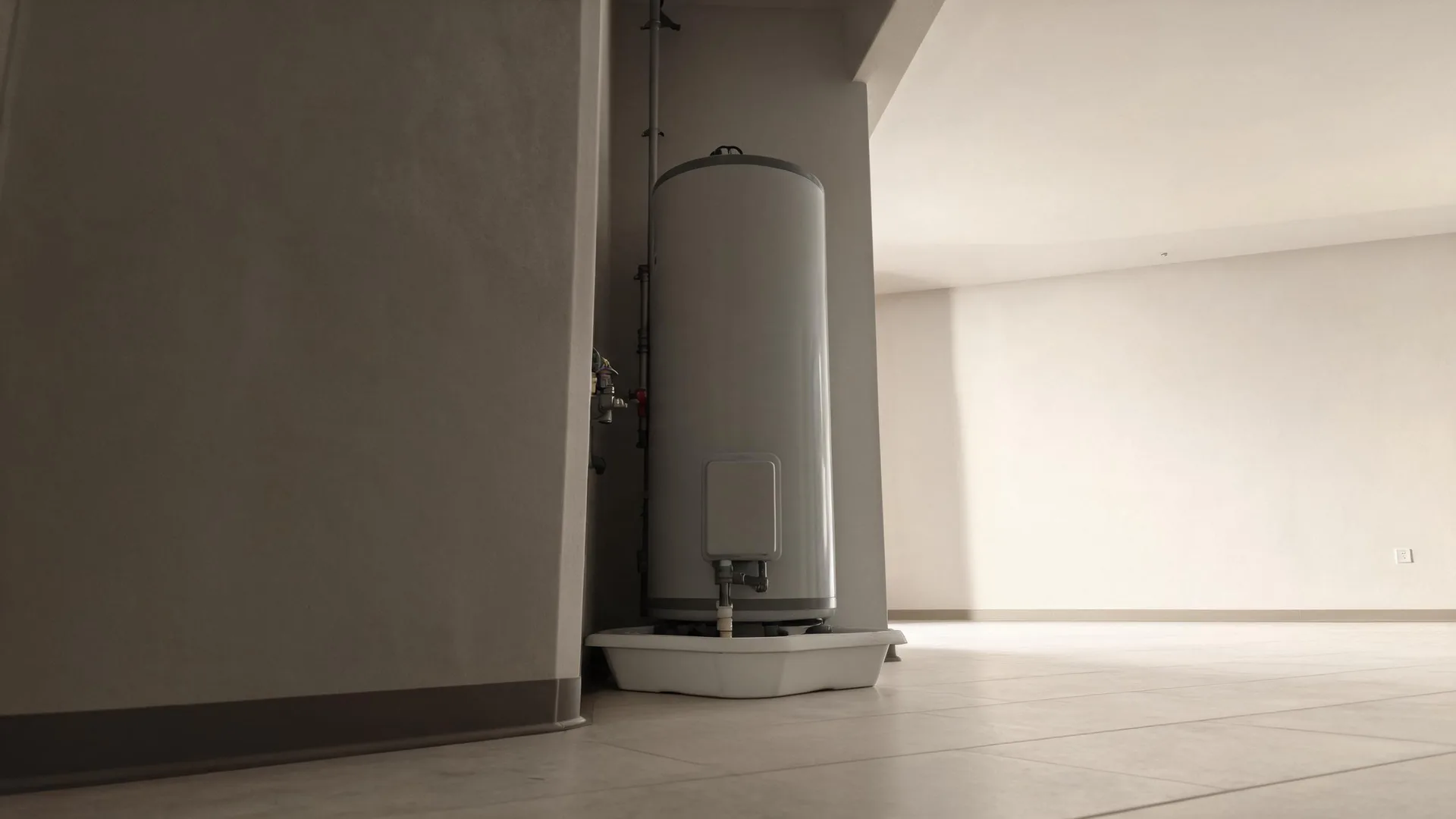
The water heater itself sits in a utility area, basement, or closet and is the piece doing the storage and heating work. Alongside it, or in place of it depending on the setup, an expansion tank mounts directly to the supply line and absorbs pressure that builds as water heats.
A temperature and pressure relief valve fastens to the tank's side and vents to a drain or the exterior, holding the system within safe limits. The cold supply inlet and hot water outlet connections sit at the top of the tank, where the plumbing ties the unit into the house's water lines.
The drawing shows a typical layout, and a licensed contractor determines exactly which components and configurations apply to your home.
Find a contractor in Berkeley CountyBerkeley County, WV, by the numbers
138 severe weather events were recorded in Berkeley County, West Virginia between 2015 and 2024.
NOAA National Centers for Environmental Information, Storm Events Database, bulk CSV export, events 2015-01-01 through 2024-12-31.Half the homes in Berkeley County, West Virginia were built in 1996 or earlier (2020-2024 ACS 5-year).
U.S. Census Bureau, 2020-2024 American Community Survey 5-Year EstimatesBerkeley County, West Virginia holds 53,819 housing units (2020-2024 ACS 5-year).
U.S. Census Bureau, 2020-2024 American Community Survey 5-Year EstimatesOwners occupy 76.0% of the occupied homes in Berkeley County, West Virginia (2020-2024 ACS 5-year).
U.S. Census Bureau, 2020-2024 American Community Survey 5-Year EstimatesSevere Weather in Berkeley County
Extreme weather puts real strain on water heating equipment, and Berkeley County's climate is its own condition. What contractors size and install here has to hold up to the demands this area actually places on it.
138 severe weather events, 2015–2024. Source: NOAA National Centers for Environmental Information, Storm Events Database.