Tell us about the job
Takes about a minute. No obligation.
A contractor quoting a water heater installation in Wayne County has to account for what the local climate actually demands of the equipment, not just its rated capacity on paper. 100 severe weather events were recorded in Wayne County, West Virginia between 2015 and 2024. At that rate, severe weather is a standing feature of operating here, not an outlier year. A system that is correctly sized for this area, with connections and components suited to weather loads rather than catalog defaults, holds up differently than one that is not. Sizing decisions made without that context produce a water heater that works adequately at first and strains earlier than it should.
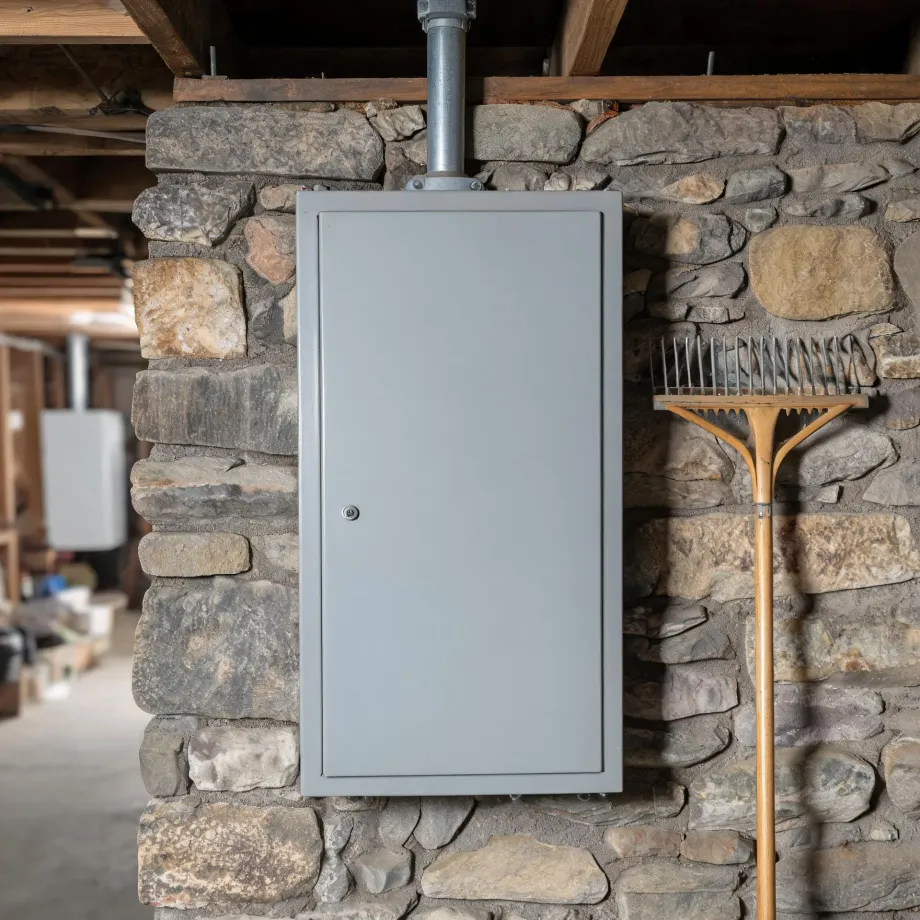
The wiring in a Wayne County house tells the story before the water heater does. Half the homes in Wayne County, West Virginia were built in 1976 or earlier (2020-2024 ACS 5-year). Electrical panels in stock that old were sized for loads that looked nothing like a modern water heater draws, and a contractor working through an installation has to confirm the service can handle it before anything else gets priced or ordered. That assessment changes the scope of the job more often than the unit selection does.
What a Water Heater Installation Covers
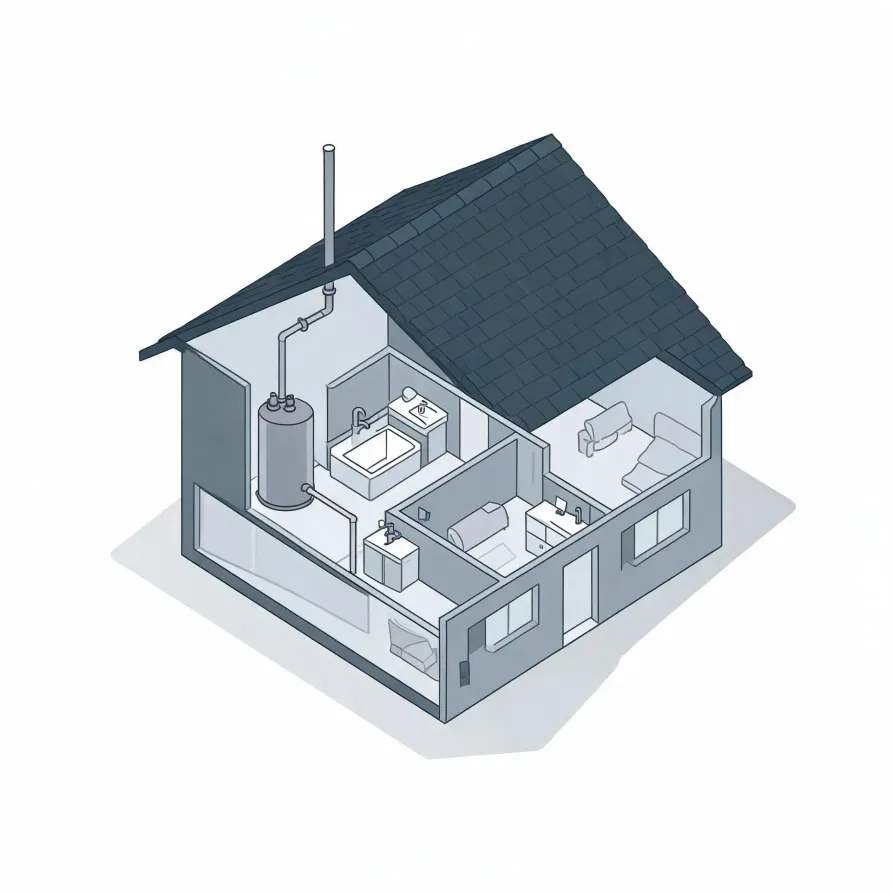
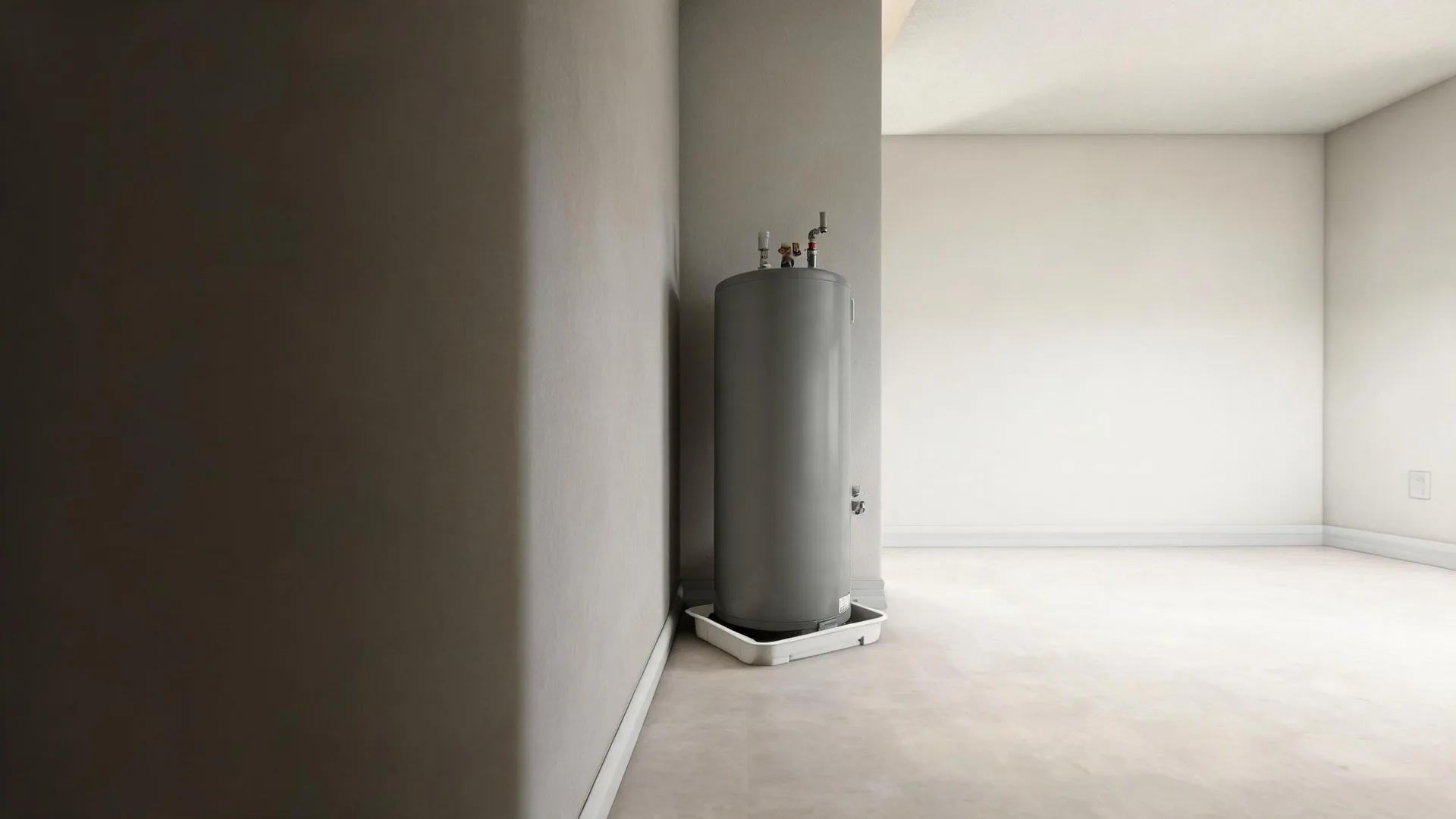
The tank or tankless unit is the centerpiece of the job. A storage-tank water heater sits in a utility room, basement, or closet and holds a reservoir of heated water ready for use. A tankless unit mounts to a wall and heats water as it passes through, taking up far less floor space.
The pressure relief valve attaches directly to the tank and releases pressure if it climbs too high. The supply and discharge lines connect the unit to the home's cold water feed and to every fixture that draws hot water. A gas-fired unit also gets a flue or vent pipe routed to the outside, while an electric unit ties into a dedicated circuit at the breaker.
The drawing shows a typical layout, and a licensed contractor determines exactly what the installation requires in your home.
Find a contractor in Wayne CountyWayne County, WV, by the numbers
100 severe weather events were recorded in Wayne County, West Virginia between 2015 and 2024.
NOAA National Centers for Environmental Information, Storm Events Database, bulk CSV export, events 2015-01-01 through 2024-12-31.Half the homes in Wayne County, West Virginia were built in 1976 or earlier (2020-2024 ACS 5-year).
U.S. Census Bureau, 2020-2024 American Community Survey 5-Year EstimatesWayne County, West Virginia holds 18,263 housing units (2020-2024 ACS 5-year).
U.S. Census Bureau, 2020-2024 American Community Survey 5-Year EstimatesOwners occupy 78.6% of the occupied homes in Wayne County, West Virginia (2020-2024 ACS 5-year).
U.S. Census Bureau, 2020-2024 American Community Survey 5-Year EstimatesSevere Weather Events in Wayne County
Weather puts a measurable load on water heating equipment, and that load is shaped by local conditions. How hard the climate works a system in Wayne County is part of what a contractor accounts for when sizing and installing equipment here.
100 severe weather events, 2015–2024. Source: NOAA National Centers for Environmental Information, Storm Events Database.