Tell us about the job
Takes about a minute. No obligation.
A contractor quoting a water heater installation in Cabell County has to account for what the local climate actually demands of the equipment, not just the square footage of the house. 108 severe weather events were recorded in Cabell County, West Virginia between 2015 and 2024. At that rate, severe weather is a standing condition here, and it shapes what recovery capacity a unit needs, how the connections and mounting are specified, and what a properly installed system looks like versus one that merely fits the space. A unit sized for a calmer setting will work harder to hold temperature and wear faster doing it.
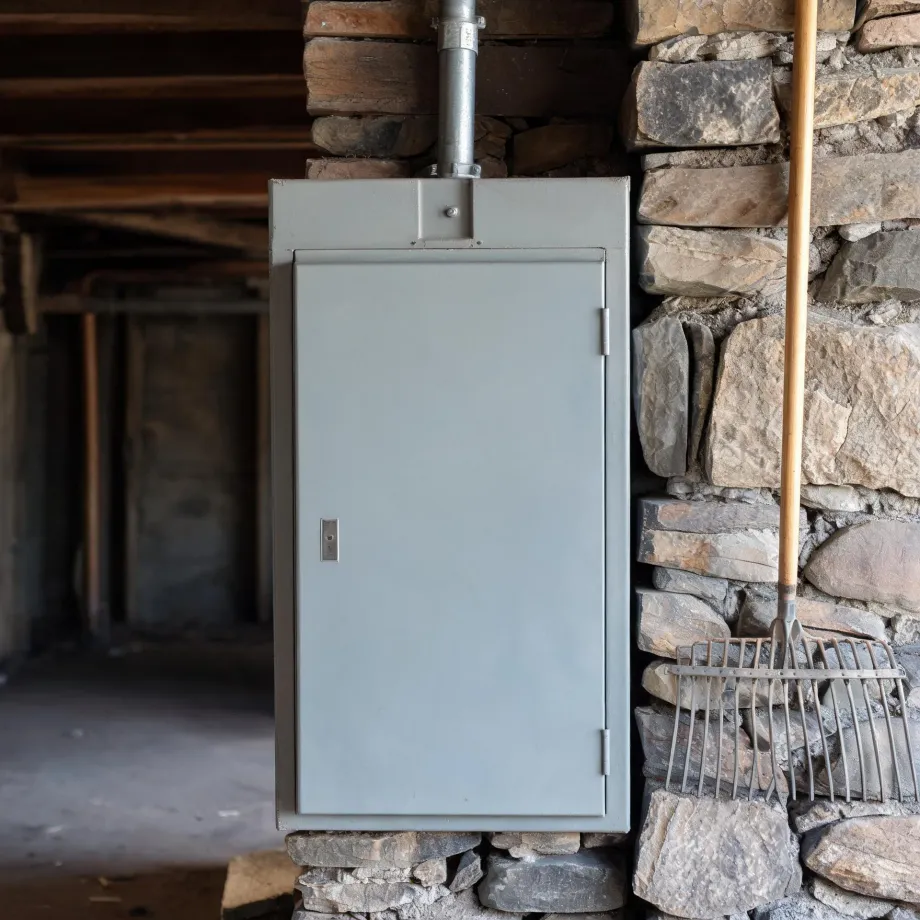
Ductwork and venting put into a house built for older equipment often carries assumptions a current water heater does not share. Half the homes in Cabell County, West Virginia were built in 1971 or earlier (2020-2024 ACS 5-year). That gap between what the house was built for and what a contractor is now fitting into it is where most of the real installation decisions live. Before a unit is ever priced, a contractor has to read what the existing venting will actually carry, and whether it routes correctly for a current installation. If it does not, the venting gets modified before anything else moves forward.
What a Water Heater Installation Covers
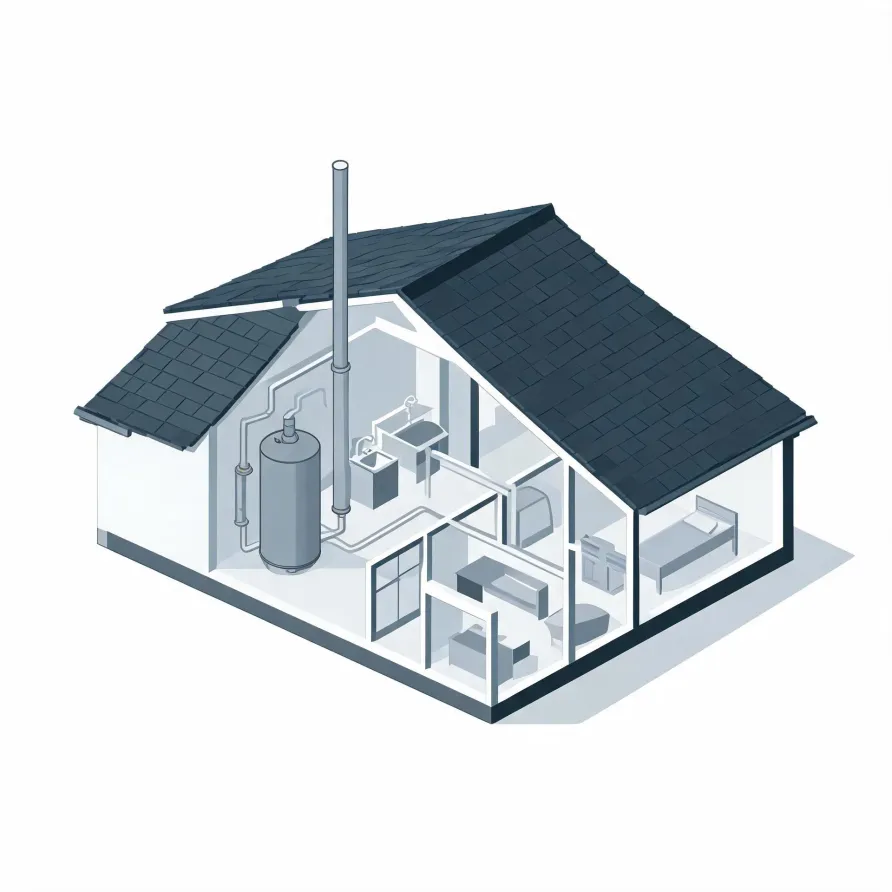
The tank or tankless unit is the centerpiece of the system, sitting in a utility room, basement, or closet and holding or heating water on demand. Attached to it are the cold water inlet, the hot water outlet, and the pressure relief valve, each fitted directly to the unit itself.
The flue or vent pipe runs from the top of the unit up through the wall or ceiling, carrying combustion gases out of the house. A gas-fired unit also connects to the gas supply line at the base, while an electric unit ties into a dedicated circuit at the same location.
The drawing shows the general layout of these components, and a licensed contractor determines exactly how they apply to your house.
Find a contractor in Cabell CountyCabell County by the Numbers
108 severe weather events were recorded in Cabell County, West Virginia between 2015 and 2024.
NOAA National Centers for Environmental Information, Storm Events Database, bulk CSV export, events 2015-01-01 through 2024-12-31.Half the homes in Cabell County, West Virginia were built in 1971 or earlier (2020-2024 ACS 5-year).
U.S. Census Bureau, 2020-2024 American Community Survey 5-Year EstimatesCabell County, West Virginia holds 46,030 housing units (2020-2024 ACS 5-year).
U.S. Census Bureau, 2020-2024 American Community Survey 5-Year EstimatesOwners occupy 64.2% of the occupied homes in Cabell County, West Virginia (2020-2024 ACS 5-year).
U.S. Census Bureau, 2020-2024 American Community Survey 5-Year EstimatesSevere Weather Events in Cabell County
Weather puts direct stress on water heating equipment, from the demands of cold ground water to power disruptions that cut a unit short mid-cycle. How hard that pressure runs in Cabell County shapes what any installation here has to account for.
108 severe weather events, 2015–2024. Source: NOAA National Centers for Environmental Information, Storm Events Database.