Tell us about the job
Takes about a minute. No obligation.
A contractor quoting a water heater installation in Greenbrier County has to treat severe weather as a standing operating condition, not an outlier. 160 severe weather events were recorded in Greenbrier County, West Virginia between 2015 and 2024. At that rate, the climate shapes what a properly sized unit looks like here, how its connections and pressure relief components are specified, and where it sits in a home relative to exposure. An install built for gentler conditions will be underbuilt for this one.
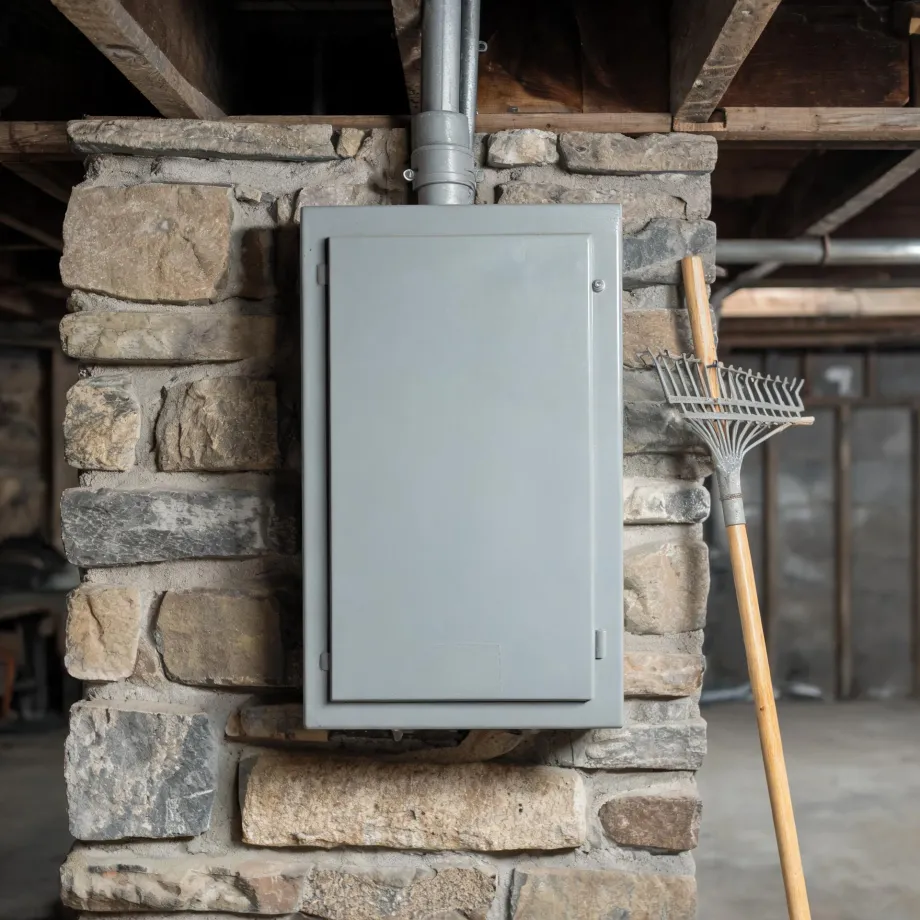
Ductwork and electrical service laid in for one generation of equipment have been adapted, rerouted, and pieced together across decades by the time a contractor arrives to put something new in. Half the homes in Greenbrier County, West Virginia were built in 1977 or earlier (2020-2024 ACS 5-year). That history shows up in the walls: supply lines that were sized for older units, panels that were added onto rather than replaced, and connections that a new water heater installation has to work around or redo. What a contractor prices first is what the house already carries, because that is what sets the scope.
What a Water Heater Installation Covers
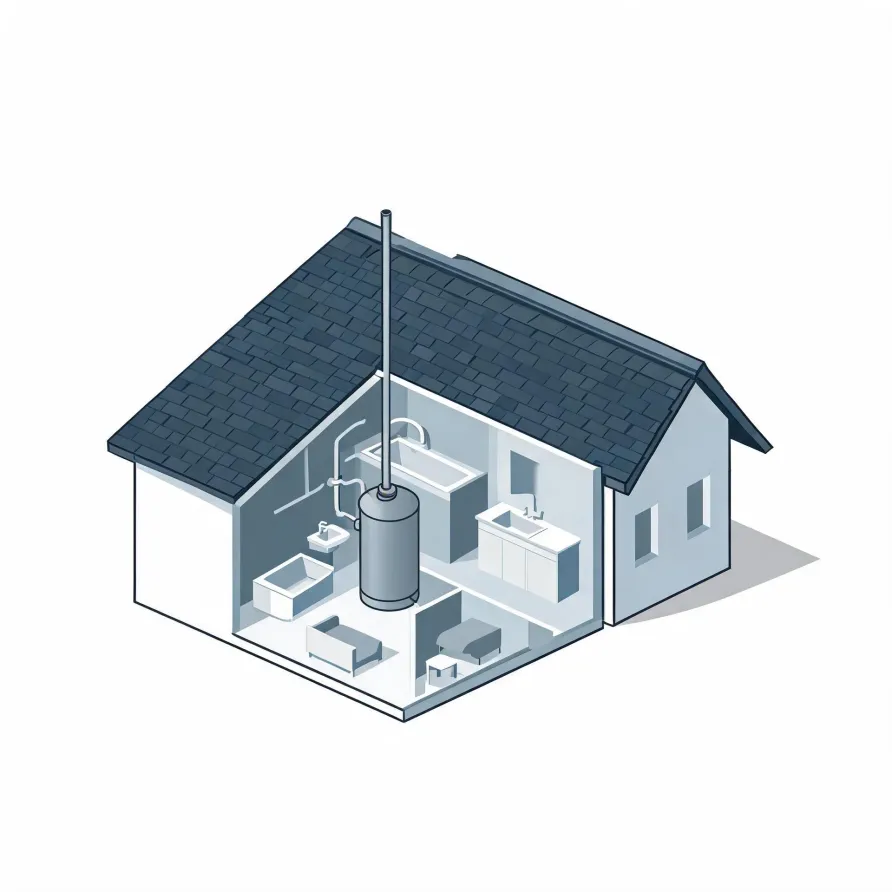
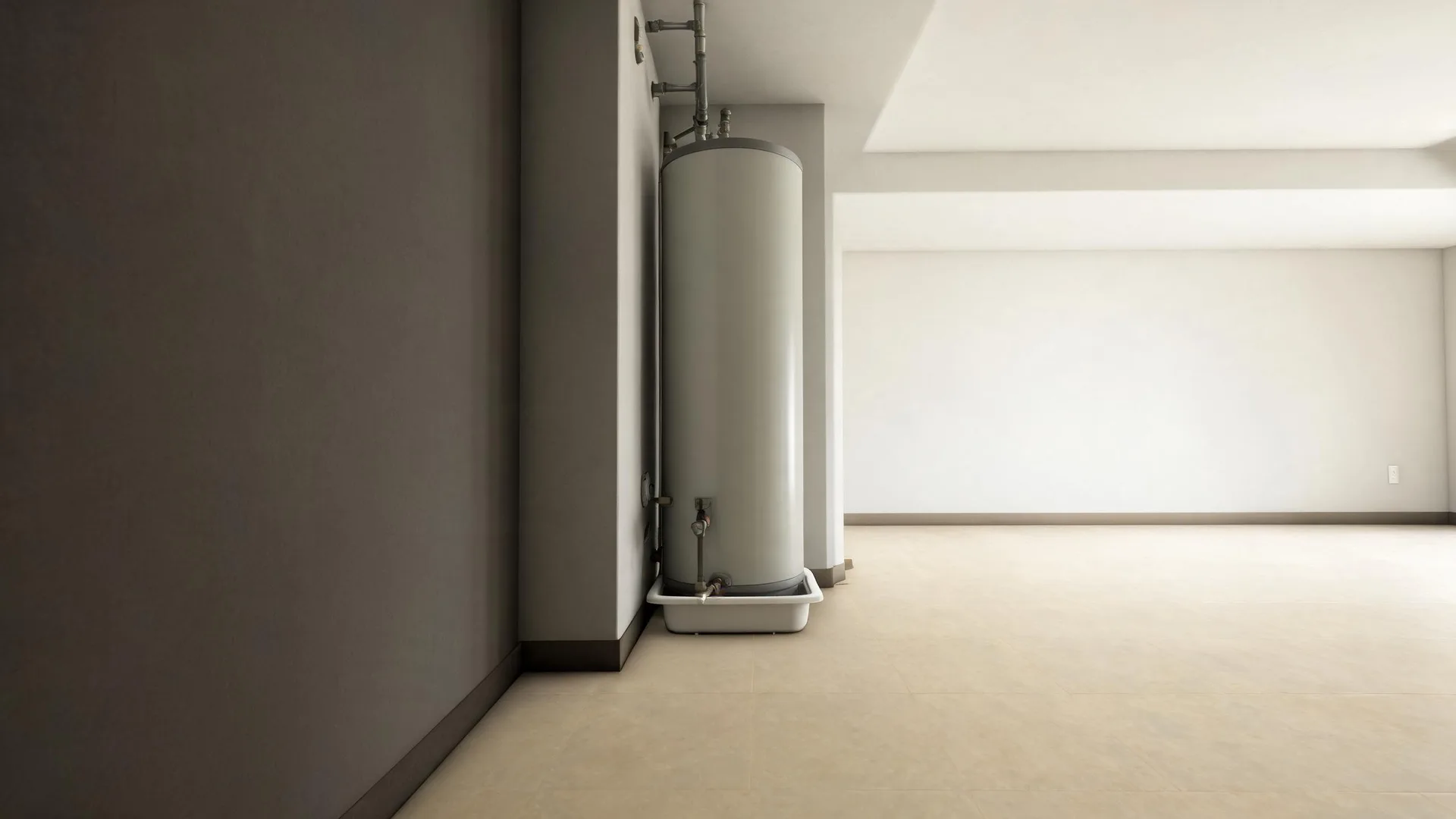
The tank or tankless unit is the centerpiece of the installation, sitting in a utility room, basement, or closet depending on the house. A contractor sets it in place, connects it to the cold supply line coming in and the hot line going out, and secures the appropriate fuel or electrical connection.
A pressure relief valve mounts directly on the unit and runs a discharge pipe to a safe drain point. The flue or venting assembly exits through a wall or roof, carrying exhaust gases out of the living space. Where gas is the fuel source, the gas line terminates at a shutoff valve at the unit itself.
The drawing shows a general layout of these components, and a licensed contractor determines exactly what the installation requires in your home.
Find a contractor in Greenbrier CountyGreenbrier County by the Numbers
160 severe weather events were recorded in Greenbrier County, West Virginia between 2015 and 2024.
NOAA National Centers for Environmental Information, Storm Events Database, bulk CSV export, events 2015-01-01 through 2024-12-31.Half the homes in Greenbrier County, West Virginia were built in 1977 or earlier (2020-2024 ACS 5-year).
U.S. Census Bureau, 2020-2024 American Community Survey 5-Year EstimatesGreenbrier County, West Virginia holds 17,913 housing units (2020-2024 ACS 5-year).
U.S. Census Bureau, 2020-2024 American Community Survey 5-Year EstimatesOwners occupy 73.1% of the occupied homes in Greenbrier County, West Virginia (2020-2024 ACS 5-year).
U.S. Census Bureau, 2020-2024 American Community Survey 5-Year EstimatesSevere Weather Events in Greenbrier County
Extreme weather puts strain on water heating equipment: hard freezes, power surges, and wide temperature swings all shorten the life of a system or push it past its limits. Knowing what this area sees is part of sizing and installing equipment that holds up over time.
160 severe weather events, 2015–2024. Source: NOAA National Centers for Environmental Information, Storm Events Database.