Tell us about the job
Takes about a minute. No obligation.
A contractor quoting a water heater installation here has to account for what the local climate regularly puts a home through. 317 severe weather events were recorded in Kanawha County, West Virginia between 2015 and 2024. At that rate, severe weather is part of normal operating life in this county, which means sizing decisions, connection points, and venting arrangements are all shaped by a load that shows up routinely. A unit installed to catalog specs alone, without adjusting for what this climate asks of it, will be fighting conditions the install did not plan for from the start.
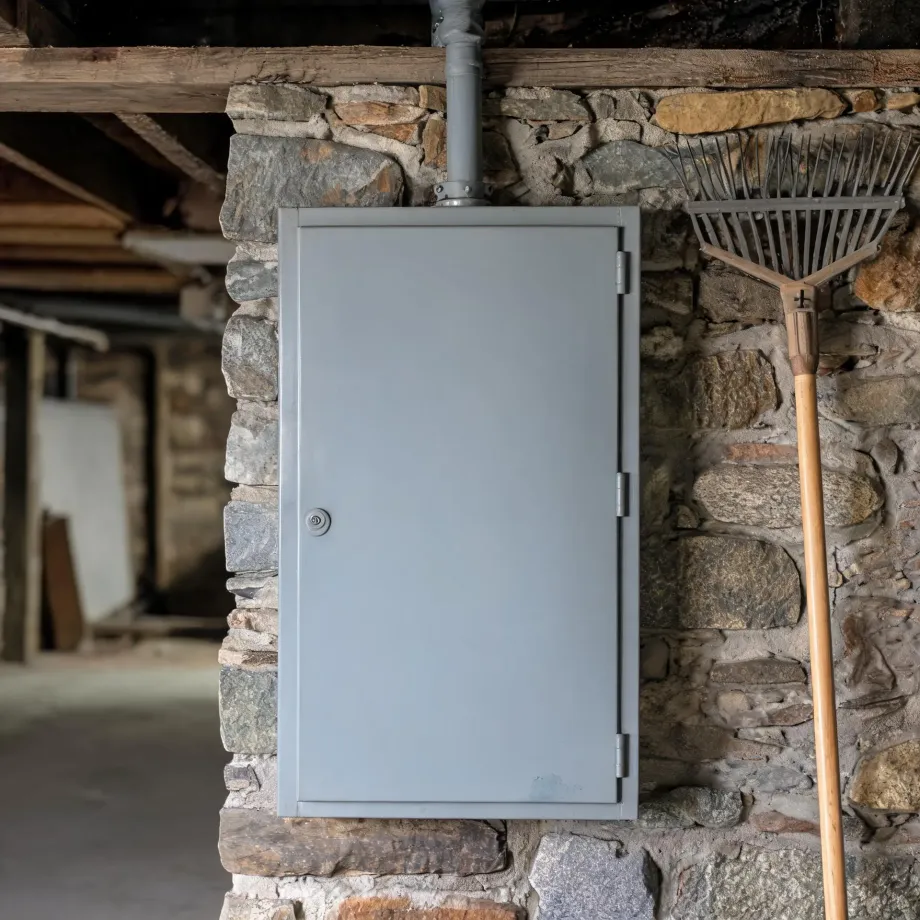
Electrical service is the part of a water heater installation that catches homeowners off guard. Half the homes in Kanawha County, West Virginia were built in 1966 or earlier (2020-2024 ACS 5-year). A house built in that era was wired for the loads of that era, and a panel that has never been upgraded often cannot feed a new water heater without a contractor first pricing the electrical work separately. What the ductwork is to a furnace job, the panel is here: the contractor has to look at it before the quote for the unit means anything.
What a Water Heater Installation Covers
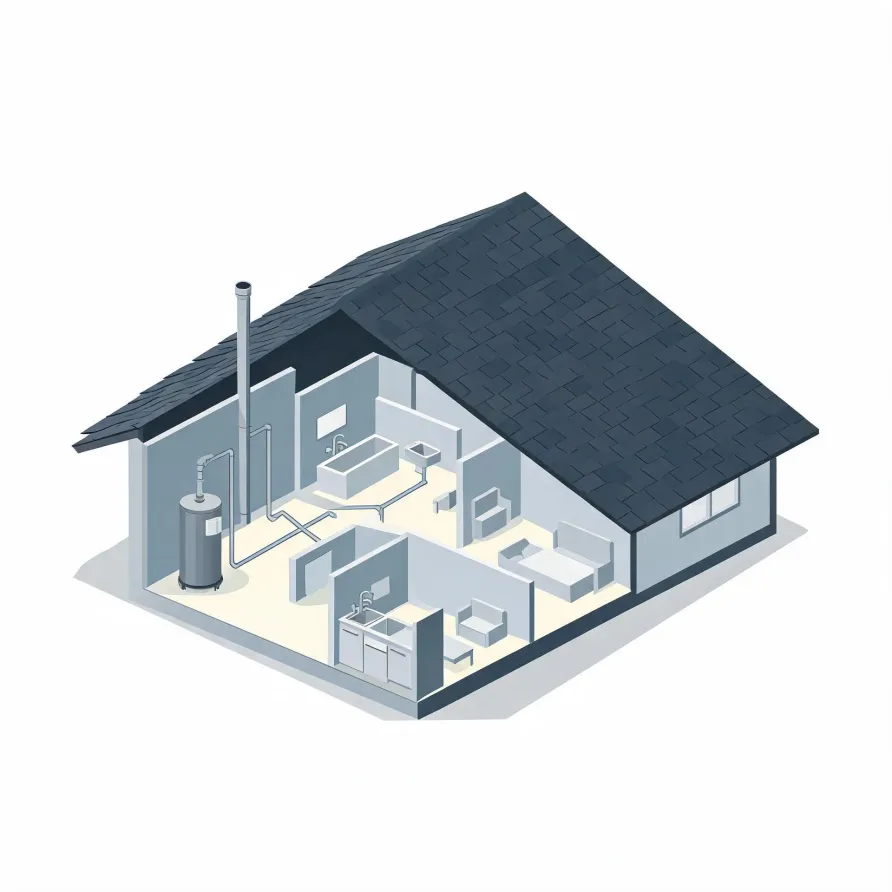
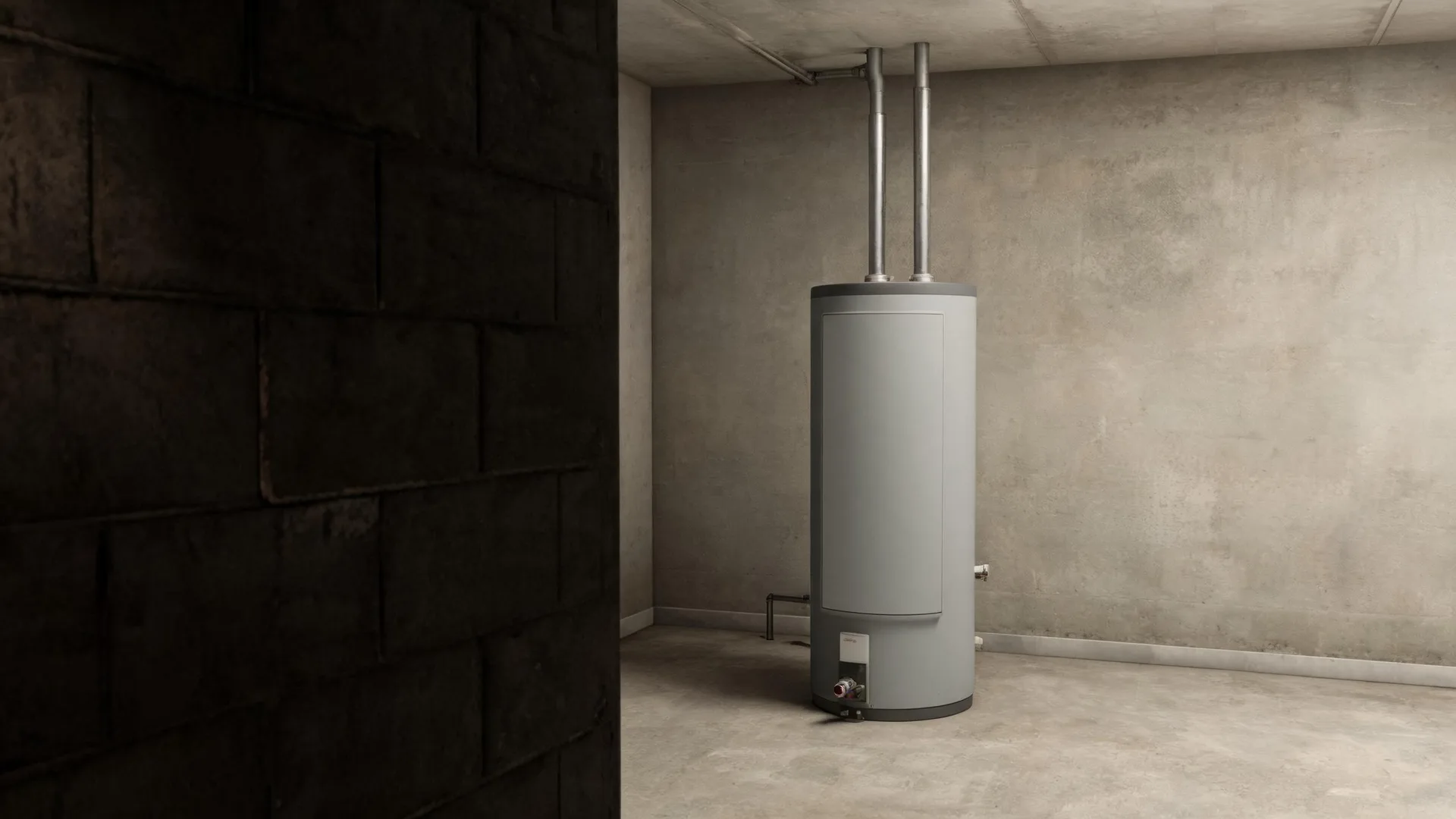
The tank or tankless unit is the centerpiece of the installation, sitting in a utility room, basement, or closet and holding or heating the water your household draws on daily. Connected to it is the cold-water supply line coming in and the hot-water line going out to every fixture in the house.
A pressure relief valve mounts directly on the unit and opens if pressure inside builds too high. The flue or venting pipe runs from the unit up and out of the house, carrying combustion gases away. A drain pan sits beneath the unit to catch any water that escapes.
The drawing shows the general layout of these components, and a licensed contractor determines exactly what applies in your home.
Find a contractor in Kanawha CountyKanawha County by the Numbers
317 severe weather events were recorded in Kanawha County, West Virginia between 2015 and 2024.
NOAA National Centers for Environmental Information, Storm Events Database, bulk CSV export, events 2015-01-01 through 2024-12-31.Half the homes in Kanawha County, West Virginia were built in 1966 or earlier (2020-2024 ACS 5-year).
U.S. Census Bureau, 2020-2024 American Community Survey 5-Year EstimatesKanawha County, West Virginia holds 90,408 housing units (2020-2024 ACS 5-year).
U.S. Census Bureau, 2020-2024 American Community Survey 5-Year EstimatesOwners occupy 71.1% of the occupied homes in Kanawha County, West Virginia (2020-2024 ACS 5-year).
U.S. Census Bureau, 2020-2024 American Community Survey 5-Year EstimatesSevere Weather Events in Kanawha County
Storm activity puts stress on water heaters through power surges, sediment disturbance, and demand spikes that follow outages. How much of that a unit absorbs over its life depends on where it sits, which is why local weather history belongs on a page about water heater installation in Kanawha County.
317 severe weather events, 2015–2024. Source: NOAA National Centers for Environmental Information, Storm Events Database.