Tell us about the job
Takes about a minute. No obligation.
A contractor quoting a water heater installation in Putnam County has to account for a climate that puts real and repeated load on plumbing systems year after year. 197 severe weather events were recorded in Putnam County, West Virginia between 2015 and 2024. At that rate, severe weather is part of the normal background any installed system runs against, which means sizing, mounting, and connection quality are decisions shaped by local conditions rather than default specs. A unit fitted to catalog minimums can fall short when the environment around it is this active.
Ductwork and electrical service sized for older equipment are what a contractor finds in a large share of Putnam County homes, and those two things decide how a water heater installation actually goes. Half the homes in Putnam County, West Virginia were built in 1989 or earlier (2020-2024 ACS 5-year). A house built around that period was wired and vented for what was available then, and modern units draw differently and exhaust differently. If the existing infrastructure fits, the job moves quickly. If it does not, a contractor prices a second scope before the new unit goes in.
What a Water Heater Installation Covers
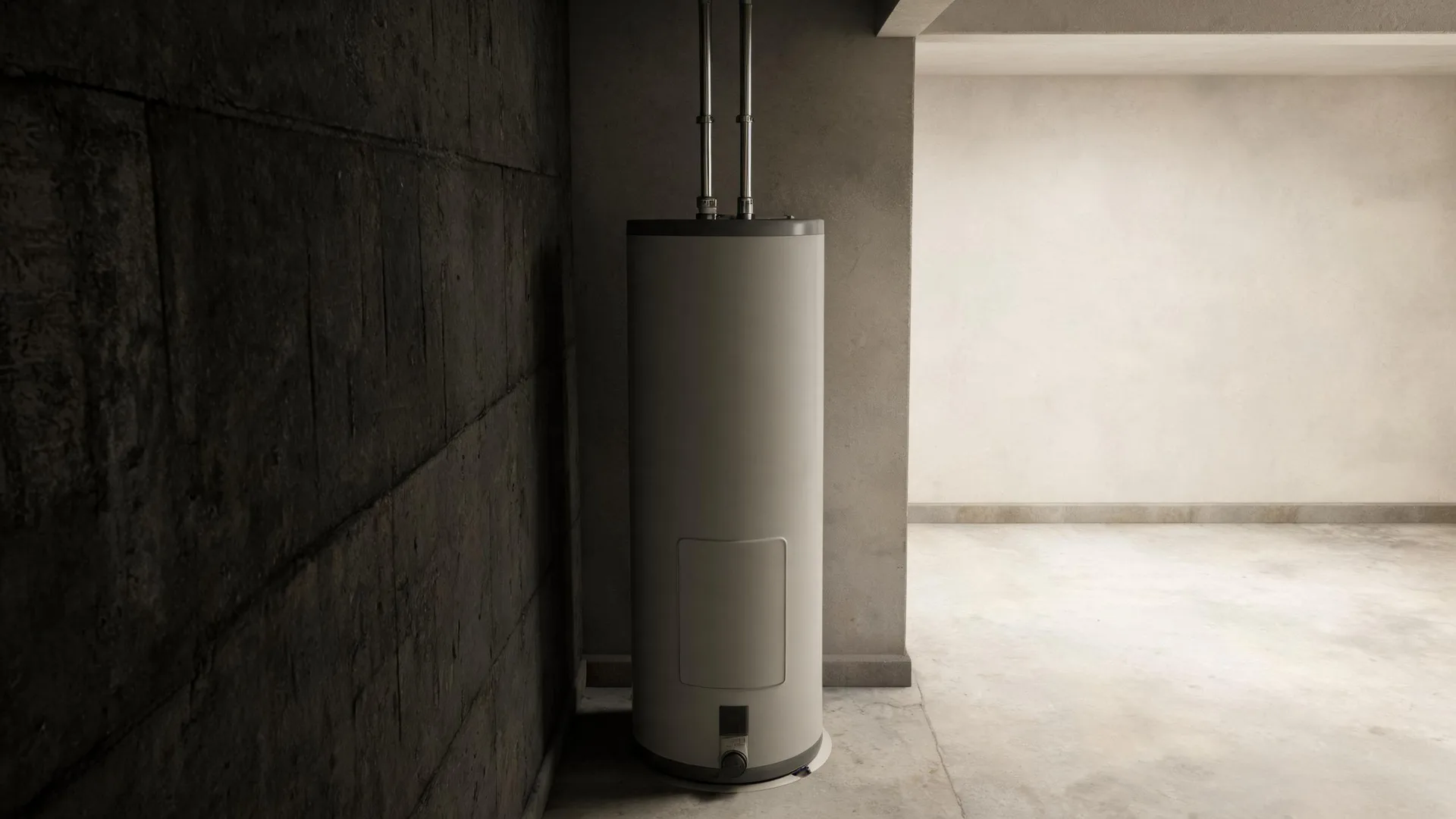
The tank or tankless unit is the centerpiece of the job. A storage tank sits in a utility space, basement, or closet and holds a reserve of heated water ready for use. A tankless unit mounts to a wall and heats water on demand, taking up far less floor space.
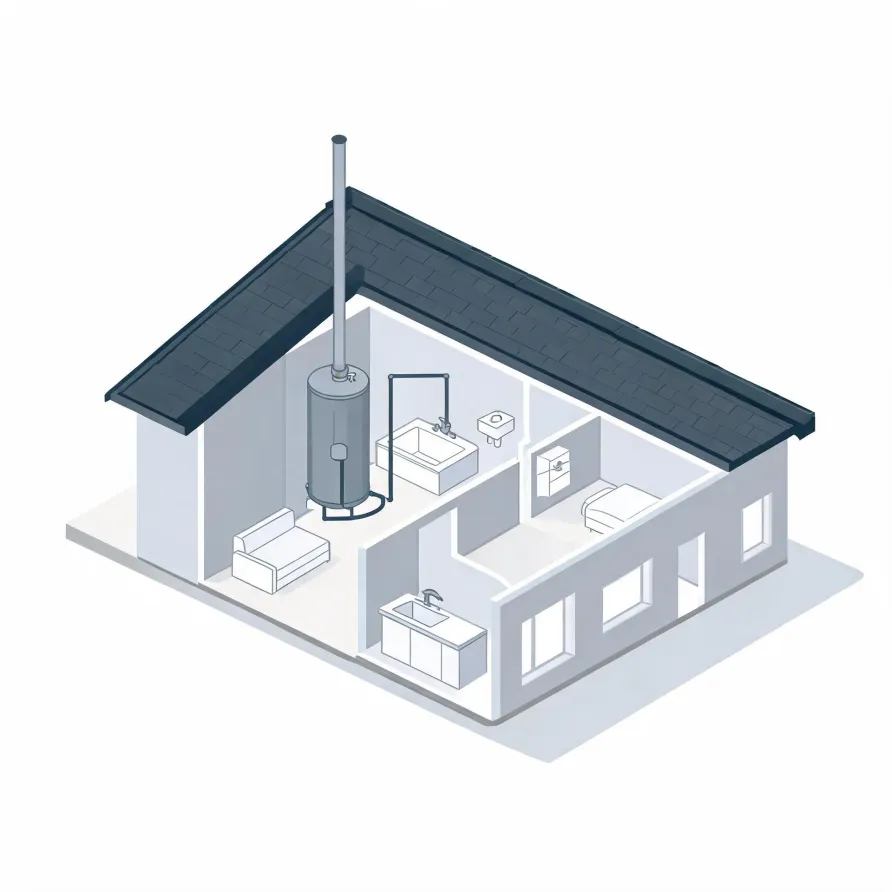
The pressure relief valve mounts directly on the tank and releases pressure if it climbs too high. The supply and discharge lines connect the unit to the home's cold water feed and to every fixture that draws hot water. An expansion tank sometimes sits alongside the main unit to absorb pressure created during heating.
The drawing shows a typical layout, and a licensed contractor determines exactly what the installation requires in your home.
Find a contractor in Putnam CountyPutnam County, by the numbers
197 severe weather events were recorded in Putnam County, West Virginia between 2015 and 2024.
NOAA National Centers for Environmental Information, Storm Events Database, bulk CSV export, events 2015-01-01 through 2024-12-31.Half the homes in Putnam County, West Virginia were built in 1989 or earlier (2020-2024 ACS 5-year).
U.S. Census Bureau, 2020-2024 American Community Survey 5-Year EstimatesPutnam County, West Virginia holds 24,963 housing units (2020-2024 ACS 5-year).
U.S. Census Bureau, 2020-2024 American Community Survey 5-Year EstimatesOwners occupy 81.8% of the occupied homes in Putnam County, West Virginia (2020-2024 ACS 5-year).
U.S. Census Bureau, 2020-2024 American Community Survey 5-Year EstimatesSevere Weather Events in Putnam County
Water heater demand tracks closely with what the weather outside is doing. Extreme conditions put harder miles on equipment, and what Putnam County sees in a given year shapes how much any installed unit has to work.
197 severe weather events, 2015–2024. Source: NOAA National Centers for Environmental Information, Storm Events Database.